
In 2020, eligible employees in every state could receive paid family leave … temporarily and for COVID-related reasons, under the Families First Coronavirus Response Act. But outside of this expired emergency legislation, there are only a handful of states that require paid family leave.
According to the most recent BLS data, 23% of private industry workers regularly have access to paid family leave. But as the number of states with paid family leave rises, this number will (and has!), too.
So, what is paid family leave? Which states require it? And, how do state leave laws compare with the federal Family and Medical Leave Act? Get your questions answered below.
What is paid family leave?
Paid family leave (PFL), or paid family and medical leave (PFML), is a state-mandated law that provides employees with paid family and medical leave. States with paid family leave require employees and/or employers to contribute to a paid leave fund. Eligible employees who work in states with state family and medical leave laws receive wages when they take off from work for qualifying reasons.
In most (but not all) cases, family and medical leave are lumped together under one law. But, there’s a difference between the two:
- Paid family leave: Time away from work employees can spend bonding with a new child or taking care of ill family members
- Paid medical leave: Time away from work employees can take to care for their own serious illness
If you’re an employer with employees who work in one of the states with paid family leave, you need to know your responsibilities.
Keep in mind that paid family leave is different from paid sick leave. Paid sick leave is time off an employee can use if they are out sick. A number of states have paid sick leave laws.

State family leave vs. federal family leave
The Family and Medical Leave Act (FMLA) is a federal law that requires businesses with at least 50 employees to provide unpaid leave. FMLA guidelines for employers apply to qualifying businesses in all states.
Under federal law, employees can take leave for:
- The birth, adoption, or foster care placement of a child
- The care of a spouse, child, or parent with a serious health condition
- A personal serious health condition that makes the employee unable to perform their job
- A situation that requires attention because of the military deployment of a spouse, child, or parent
The main difference between federal and state FMLA laws is whether the leave is paid or unpaid. Federal family leave is unpaid. State family leave is paid.
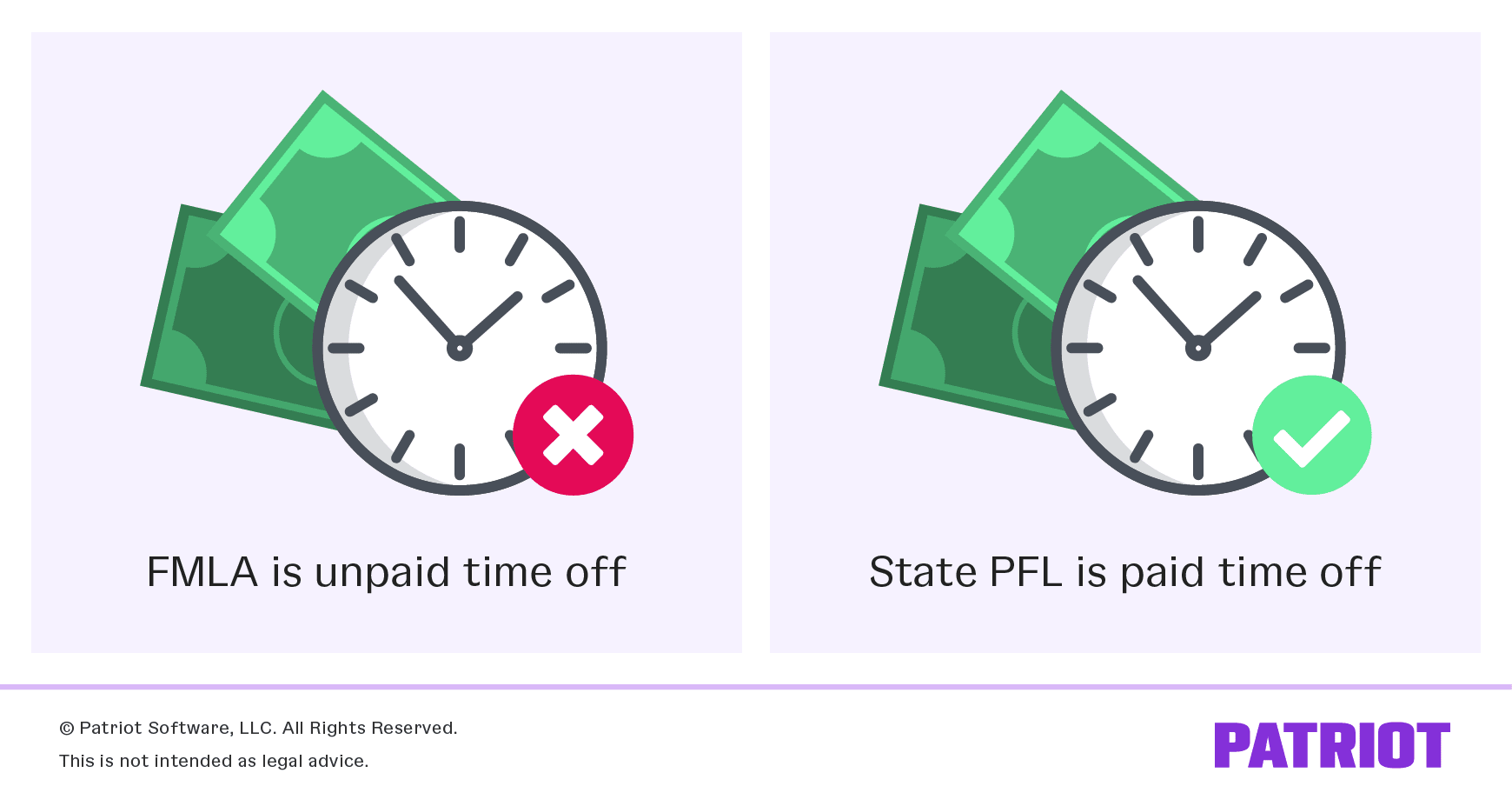
State law generally requires employees, employers, or both to pay into a fund. You must deduct and/or contribute a standard percentage of an employee’s wages to fund paid family and medical leave. Because federal FMLA is unpaid, you don’t have to worry about these types of payroll deductions.
States with paid family leave
So, what states have paid family leave? The following have state leave laws:
- California
- Colorado (coming soon)
- Connecticut
- D.C.
- Delaware (coming soon)
- Maryland (coming soon)
- Massachusetts
- New Hampshire (coming soon, voluntary)
- New Jersey
- New York
- Oregon (coming soon)
- Rhode Island
- Washington
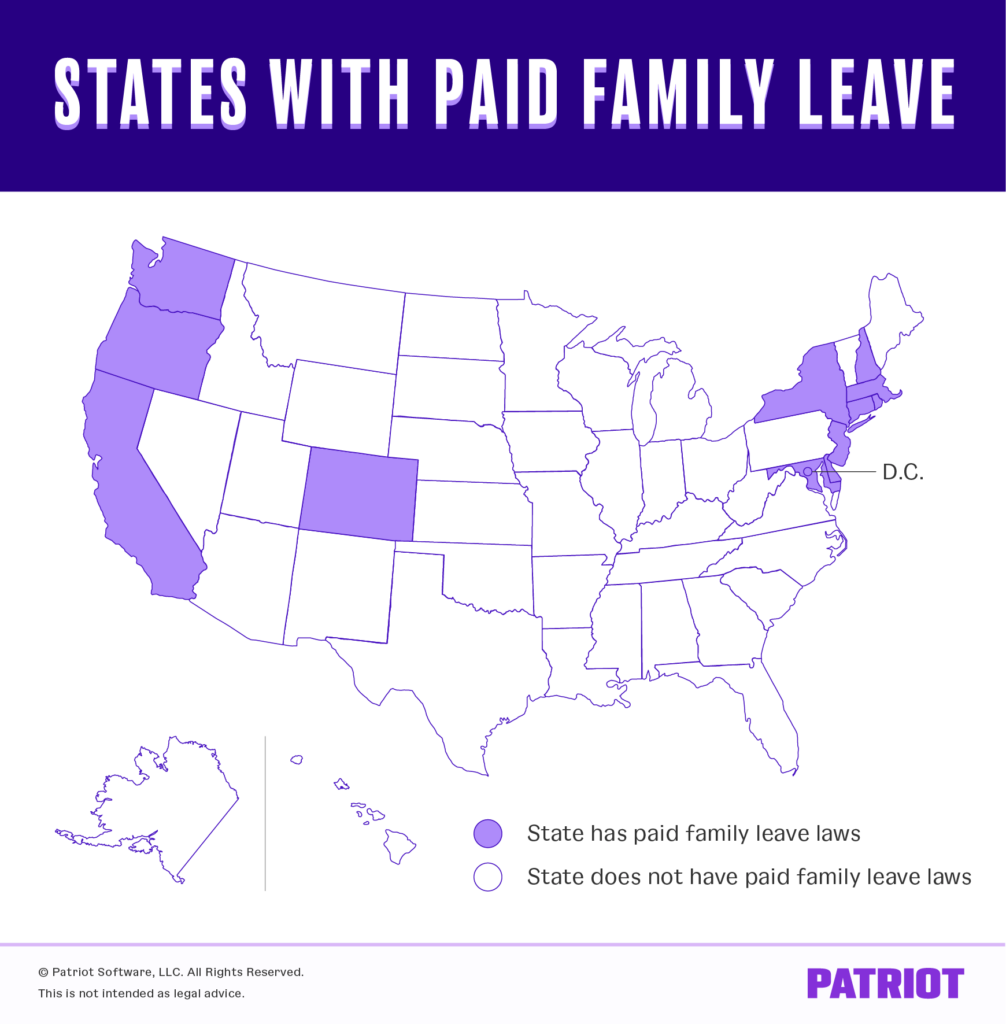
Some cities, like San Francisco, also require paid family leave. And, there are some states that have an unpaid family leave law (e.g., Vermont) that applies to more employers than the FMLA.
The states with state-mandated paid family leave set specific rules about:
- Reasons for paid leave
- How long employees can take paid leave
- Which employees qualify for leave
- Who pays
- Contribution rate
- Paid family leave benefit amount
If you must provide paid family leave to your employees, notify your employees and post a notice in your workplace.
Read on for a detailed overview of the paid family leave laws by state.
California
California’s Paid Family Leave was the first program implemented in the country. If you’re an employer in California, you do not need to contribute to the state’s paid family leave program. However, you must withhold contributions from your employees’ wages for the employee-funded program.
California’s PFL is part of its State Disability Insurance (SDI) Program. Here’s what you need to know about it:
- Reasons for paid leave: Employees can take paid family leave to:
- Care for a seriously ill family member
- Bond with a new child (birth, adoption, or foster care)
- Participate in a qualifying event due to a family member’s military deployment to a foreign country
- How long employees can take paid leave: Up to eight weeks within any 12-month period
- Which employees qualify for leave: Workers who are “attached to the labor market” (e.g., employed), have wage loss due to the leave, and have sufficient earnings in the previous 12-month period
- Who pays: Employees
- Contribution rate: 1.1% of employee wages (a combined rate for both state disability insurance and paid family leave)
- Paid family leave benefit amount: Approximately 60-70% of the employee’s weekly salary
Check out California’s website for more information on paid family leave.
Colorado
Colorado’s upcoming paid family leave program requires employers to start withholding and remitting employee and employer contributions in 2023. Employees can access paid family and medical leave benefits starting in 2024.
Colorado employers, don’t put off getting to know this new law until the last minute. Here’s what you need to know:
- Reasons for paid leave: Employees can take Colorado paid family leave if they:
- Have given birth
- Need to deal with a serious health condition
- Must care for a seriously ill family member
- Need to take safe leave due to domestic violence
- How long employees can take paid leave: 12 weeks, plus four additional weeks if the employee has medical complications
- Which employees qualify for leave: Employees who have earned at least $2,500 at their job
- Who pays: Employees and employers
- Contribution rate: 0.9%, split 50/50 between employees and employers; businesses with fewer than 10 employees are exempt from employer portion
- Paid family leave benefit amount: Varies based on how the employee’s average weekly wage compares to the state average; maximum weekly benefit is $1,100 for 2024
For more information on Colorado’s upcoming state family leave law, contact the state.